Identity
MIM to Entra ID: Move in Phases, Not Promises
Microsoft Identity Manager is usually not one thing. It is HR data, directory rules, group logic, old connectors, exception handling, and decisions that need proof before they can change.
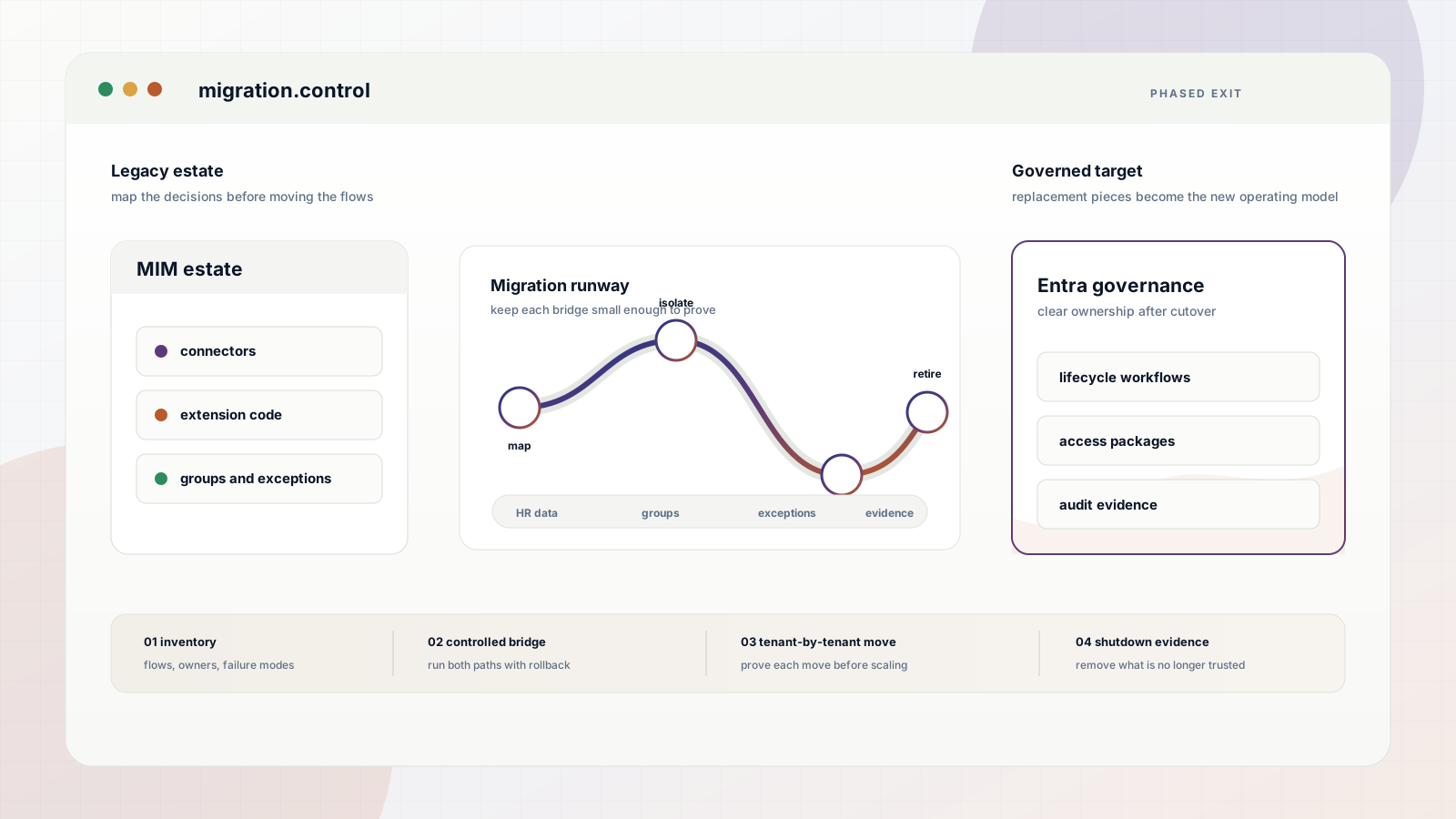
Extended support gives organizations room to plan, but it does not turn MIM into a modern governance platform. It also creates a quiet illusion: that 2029 is a deadline you can safely ignore until it arrives. The real deadline is not a calendar date. It is the next HR change, the next SaaS app, the next manual exception that becomes normal operations. By the time a migration is finally urgent, the identity system is harder to describe than it was when the conversation started.
In many estates, MIM is still doing quiet, important work: reading HR data, shaping accounts, joining records, calling extension code, pushing groups, and filling gaps between old directories and newer cloud services. The problems rarely show up as dramatic failures. They show up as operational friction that becomes part of the process: delayed access, manual corrections, exception rules, patched flows, and field changes that ripple through provisioning.
From a leadership perspective, this is where the cost lives: interruptions, escalations, and risk that often stays hard to quantify until an audit or incident exposes it. Over time, the estate becomes shaped around these exceptions, and migration becomes harder, not easier.
The deadlines you are not looking at
January 2029 gets all the attention, but the platform underneath MIM is already shifting. To stay supported, MIM needs Windows Server 2022, SQL Server 2022, SharePoint Server Subscription Edition, and the latest hotfix. Several surrounding pieces are already gone: Entra MFA Server stopped servicing requests in September 2024, the Azure AD Connector for FIM is deprecated, and MIM Hybrid Reporting cloud endpoints were retired in November 2025.
If your setup still relies on any of these, at least one deadline has already passed. The extension is useful for planning. It is not a reason to wait. Identity migrations of real complexity take twelve to thirty-six months. From mid-2026, there are roughly thirty-three months left.
Phase one: find the decisions
A migration that starts with a replacement chart usually misses the operating model. MIM sync rule over here, Entra feature over there, custom connector in a maybe column. It looks tidy until the first exception appears.
A better first phase is more concrete: write down what MIM decides today. Which source wins when HR and Active Directory disagree. Which attributes are trusted. Which groups are birthright access and which are exceptions. Which flows are still used, which no longer have a clear owner, and which manual steps happen after the sync run has already claimed success.
Before any of that, there are three questions that matter more than a project plan. What does MIM actually do for us today? Where does it create operational risk? What is the smallest change that improves control? If the first answer is unclear, the next step is a short discovery rather than a large migration plan.
That map is not documentation for its own sake. It is the only way to know whether a move to Entra should use HR-driven provisioning, lifecycle workflows, entitlement management, app provisioning, a custom connector, or a short-lived bridge while an old application is retired.
Phase two: choose one outcome
The natural temptation is to migrate component by component. It keeps the spreadsheet neat, but identity is felt as outcomes. A new employee can work on day one. A mover loses access that no longer fits. A leaver is disabled in the places that matter. A manager can approve access without routing the decision through a separate ticket queue.
Pick one outcome and make it cleaner in production. Not the most political one. Not the oldest one. Choose the slice that teaches enough about the estate without adding unnecessary delivery risk. For many organizations, that means one employee population, one HR source, one access package, or one application with a clear owner.
Building a repeatable pattern matters more than proving Entra can replace MIM in a slogan: source data, policy, approval, provisioning, evidence, rollback. Once that pattern exists, the next slice is clearer. Large identity migrations often struggle when scope is treated as a single project. A better approach is a program that removes uncertainty, one outcome at a time.
Phase three: move the clean paths
Microsoft Entra ID Governance is strongest when identity work is expressed as policy instead of hidden sync behavior. HR-driven provisioning can create and update accounts from a source system. Lifecycle workflows can handle joiner, mover, and leaver tasks. Entitlement management can package access with approval and expiry. Access reviews and Privileged Identity Management bring recurring evidence and just-in-time control into the same operating model.
The clean paths are the ones where the business rule is known, the owner is available, and the target system can support a clear provisioning pattern. Move those first. Leave the constrained pieces visible, but do not let them define the entire program.
Phase four: deal with the awkward systems
MIM rarely survives because everything around it is elegant. It survives because some systems are old, private, heavily customized, or not designed for modern protocols. Treating those systems as simple edge cases usually creates the next exception layer.
Entra ID Governance is the natural destination for many MIM scenarios, but many does not mean all. Certificate management for smartcards and software certificates still lives largely on-premises. Bastion-forest privileged access management with shadow principals and time-bound Kerberos tickets has no direct cloud equivalent. Heavily customized connectors to legacy HR systems or ERP platforms do not translate into a configuration screen. Synchronization rules containing years of accumulated business logic rarely map cleanly to a lifecycle workflow.
In these cases, the right approach is rarely a simple lift to the cloud. More often, it is hybrid: Entra ID Governance where it fits, a modernized and supported MIM platform where it does not, and a controlled retirement of each component as cloud-native alternatives mature. Every integration needs a decision. Should this app get SCIM? Should it stay behind an LDAP or SQL connector for now? Should the business process change instead of preserving a legacy rule? Should the application be retired before anyone spends money polishing its provisioning story?
The answers depend on who owns each system and whether that person can say what correct access looks like.
Phase five: shrink MIM deliberately
The end state is not a dramatic cutover deck. It is a smaller MIM estate, fewer hidden rules, clearer ownership, and more identity work expressed in services the organization can audit and operate. Every phase should remove a little uncertainty: one rule retired, one manual step gone, one connector replaced, one access path governed properly.
Starting early buys options. You get time to choose the right target for each scenario while subject-matter knowledge is still available and the organization can focus.
A migration becomes manageable when the current system gets easier to understand and each next move feels like something the team can trust.