IdProxy · Federation hub
One controlled identity hub. Apps and providers stay as they are.
IdProxy sits between your applications and identity providers so policy, routing, Agent delegation, and audit evidence live in one place.
A controlled hub between applications and identity providers
Applications
- Customer app
- Legacy web app
- Mobile app
- Partner portal
- AI Agent
IdProxy
N + M
Routing, policy, and audit evidence in one place. Fewer point-to-point identity connections.
Identity providers
- Microsoft Entra
- Okta / Auth0
- Legacy ADFS
- Partner / B2B IdP
- Social login
Federation patterns
-
Keep legacy apps running
Modernize the identity layer without forcing every application to change at once.
-
Add modern identity safely
Give newer apps a clean sign-in path while older providers remain in place.
-
Serve many customer providers
Handle customer and partner identity variation without multiplying custom integrations.
-
Add consumer sign-in carefully
Introduce social or consumer identity without reopening every legacy application.
-
Delegate Agent access
Let AI Agents call approved tools through one controlled, auditable path.
-
Migrate without a hard cutover
Move tenants, providers, or applications in phases instead of betting on one launch weekend.
What lives inside the proxy
- Identity translation
- Different apps and providers can keep their current sign-in standards.
- Consistent user data
- Applications receive the same user shape even when providers differ.
- Provider discovery
- Customers and partners are routed to the right provider through one managed layer.
- Policy and routing
- Rules are versioned, reviewable, and managed per app and tenant.
- Audit evidence
- One structured timeline for each access flow.
- Operational visibility
- Live health, request history, and rollout controls in one place.
What changes with IdProxy
- Fewer identity connections
- One managed hub instead of bespoke pairings across the apps and providers you onboard.
- No application rewrites
- Applications can keep the sign-in method they already use.
- A real audit trail
- One timeline per flow. Compliance evidence stops being screenshots.
- Migration as a routine
- Swap an IdP, retire ADFS, or move a tenant in steps, without a big-bang cutover.
- Built to scale
- Designed for multi-tenant platforms and high-availability operations.
- Open standards
- Replaceable, inspectable, sovereign.
A proven identity pattern, production ready
A well-known identity pattern, delivered as a managed product with the operating surface and audit evidence required in production.
-
Legacy federation
Bridge older enterprise applications and identity providers without rewriting either side.
-
Modern identity bridge
Let modern and legacy identity paths coexist while the business migrates in phases.
-
Consumer identity bridge
Add consumer sign-in options without reopening every legacy application.
-
Policy extensions
Add business-specific access rules in one controlled place.
An identity layer built for operations
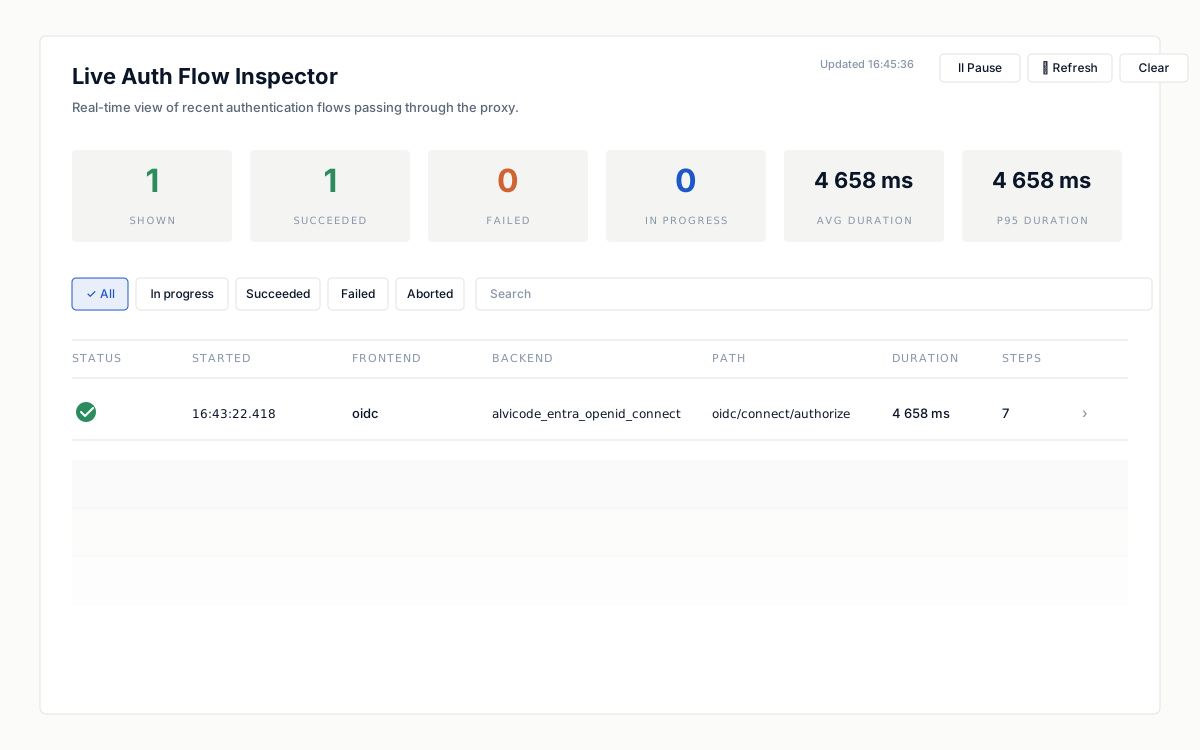
Inspector
Live access visibility
Every access flow passing through the hub: status, duration, application, provider, and session in real time.
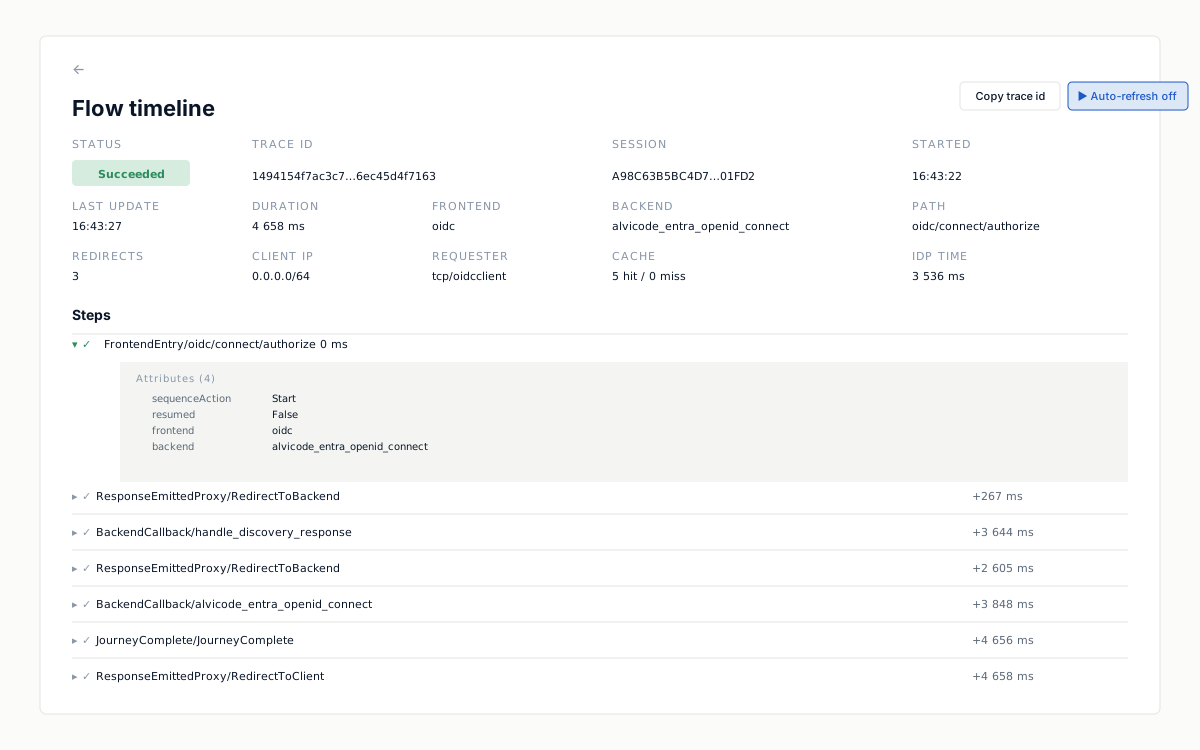
Trace
Decision history per request
A clear timeline of each identity decision, including policy, provider, timing, and the system that answered.
Common questions before a pilot
-
How is this different from running Keycloak in front of everything?
A full IdP owns users and credentials. IdProxy brokers between your apps and the IdPs that already hold them. Keep your IdP.
-
What protocols are supported?
OIDC, OAuth 2.1, SAML 2.0 on both sides. Social login as OIDC backends. Discovery and metadata first-class.
-
Where does it run?
Stateless, container-native. Your Kubernetes, Azure App Service, or managed in European regions.
-
How do we migrate?
App by app. You decide. Applications move to IdProxy at your own pace.
Ready to scope a pilot?