Identity
VerifyID: Identity Verification for Onboarding and Recovery
First sign-in and account recovery are trust moments. VerifyID lets users prove who they are with a familiar eID, then guides them into the identity provider your organization already uses.
A temporary password is easy to describe and hard to defend. Someone has to create it, deliver it, expire it, and explain why it is safe enough for the first moment of access. The process often works, but it leaves too much trust in manual handling.
VerifyID changes that path. A new employee, contractor, student, or partner starts from a branded verification flow, proves identity with a supported national eID or trusted authentication method, and receives a guided route into the account platform behind the service.
What VerifyID does
VerifyID owns the identity proofing step around onboarding, device changes, account recovery, and high-assurance step-up moments. It is not tied to one identity provider. It can sit in front of Microsoft Entra ID, Okta, Auth0, Keycloak, IdProxy, or a custom account platform where the target system exposes a secure integration path.
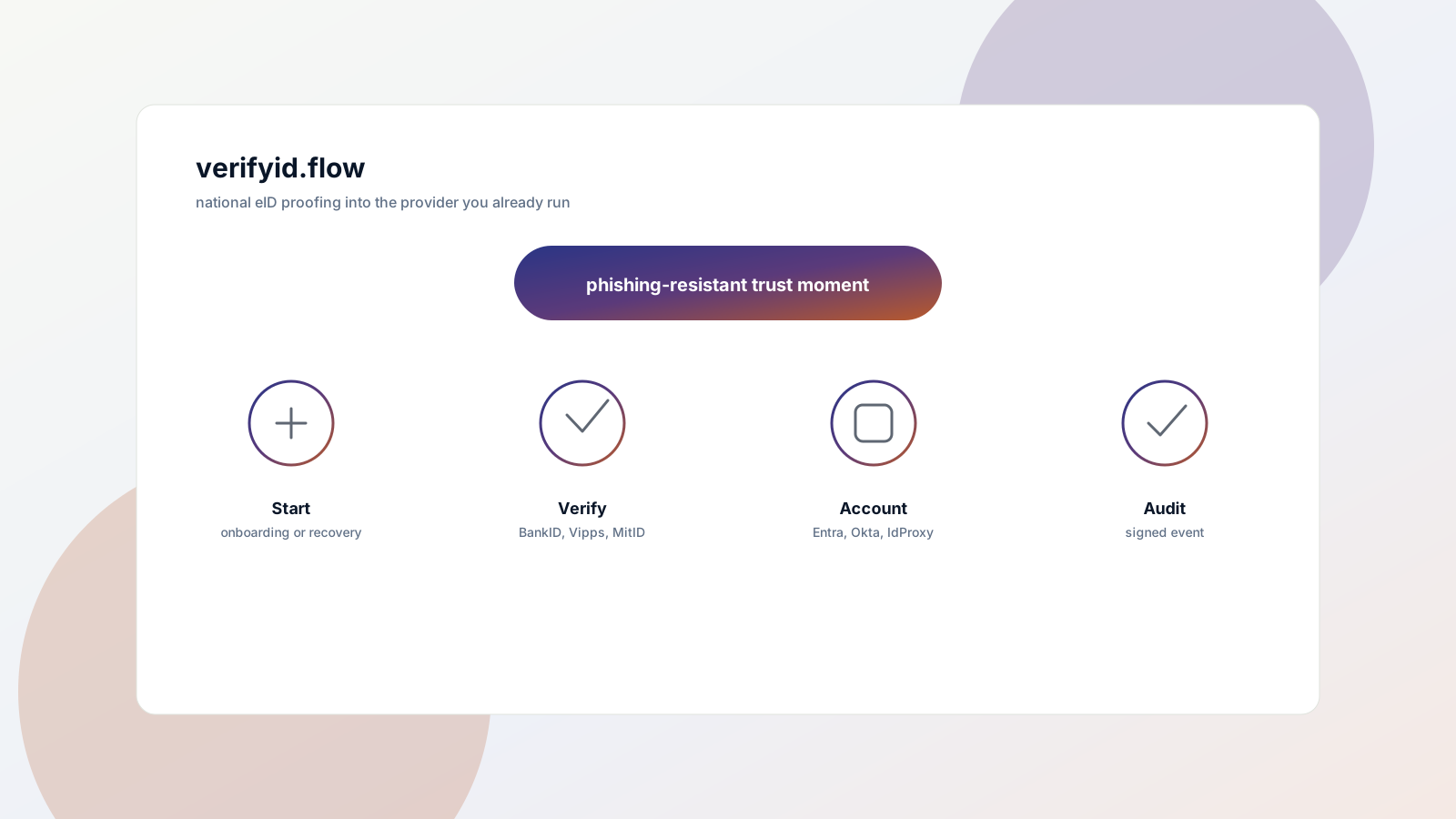
In a typical flow, the user visits the organization's VerifyID address, selects an approved verification method, completes the eID check, and is guided through the next account step. The downstream action can be account activation, recovery, MFA setup, profile confirmation, or another verified workflow.
Why it belongs beside your provider
The identity provider remains the account and access control plane. VerifyID is the trusted front door for moments where the organization needs a stronger answer to a simple question: is this person really the account holder?
That separation matters. Verification can be adapted to local eID providers and assurance needs, while the existing provider keeps ownership of account state, authentication methods, policy, and audit evidence.
Where it helps first
The cleanest starting point is usually onboarding. New users can arrive with a known identity, complete the verification flow, and get ready to use their account without waiting for an IT-issued secret. The same pattern also helps when a phone is lost, a laptop is replaced, or a user needs to recover access without a ticket queue becoming part of the security model.
For regulated environments, the value is not only speed. Each verification event can become structured evidence: which method was used, what assurance was accepted, which account action followed, and when it happened.
What changes operationally
The service desk spends less time distributing temporary access. Security gets fewer weak recovery paths to defend. Users get a familiar verification experience at the moment they need access. Platform teams keep the identity model clean instead of building one-off onboarding scripts around every exception.
VerifyID is a small product with a focused job: make identity verification useful at the moments access usually becomes fragile.